The Nest Thermostat: A History from Someone Who Installed Them
This post contains an Amazon affiliate link. As an Amazon Associate I earn from qualifying purchases.
When the Google Nest was first launched in the UK, it was simply called the “Nest Thermostat” — not Google Nest, as it’s known today.
Before Nest arrived
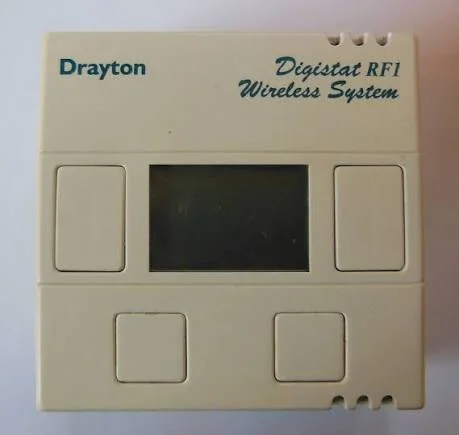
Before Nest appeared, the standard fit was the Drayton Digistat RF1 — a basic digital thermostat where you could raise or lower the temperature, nothing more. You still needed a separate time clock or programmer to control the on/off times, but at the time, it was considered state of the art. Digistat later released a version where you could set on and off times by raising and lowering the temperature instead — I recall you had the option of three “on” and three “off” settings.

The Nest launch, and the installer boom
Nest was first introduced in the American market around 2011, where it had huge success, and reached the UK around 2013-2014. It was something totally new, and all the tech-minded homeowners wanted one fitted.
I remember installing my very first one — opening the box and reading the instructions was a little confusing at first, but once I’d worked through it, the wiring into the central heating system was straightforward enough.
Around this time, there were installers who fitted nothing but these smart thermostats, and they were making good money doing it. Nest was actively feeding them work — all you had to do was register with Nest, watch a couple of training videos, and you were given a personal installer number. Every time you installed a unit, you entered that number. From what I remember, once a year the thermostat would display a boiler service reminder on screen along with the installer’s details — a clever, built-in form of advertising for the installer’s next service call.
Around the same time, British Gas introduced the Hive thermostat, though initially you could only get it installed if you signed up to a plan with them. It was slow to take off, but eventually became available to buy through merchants directly.
Why it was called the “Learning” thermostat
Setting one up meant entering details about your heating system — radiators or underfloor heating, gas or oil, and even your postcode so it could check local weather. It stored all of this and compared it over time, which is where the “learning” part came from. You also had an app on your phone or computer to adjust the temperature remotely, even when you weren’t home.
One of the best features was that it could genuinely sense whether you were home or out — and it worked well. I had one installed in my own home, and if we went to visit family, it would sense we were out and drop the temperature to whatever lower setting we’d chosen. Before heading home, my wife would open the app while I was driving and raise the temperature, so the house was warm by the time we walked in.
Later upgrades
Over time, Nest expanded what it could control — an upgrade allowed it to work with Y and S wiring systems, where originally it had only handled the heating side.
The E version — and why it caught people out
Nest later released the “E” version, with a frosted front glass, as a stripped-down, cheaper alternative. It sold extremely well, but caught a lot of people out: instead of a hardwired mains box, it shipped with a battery-powered connection. It was designed as a DIY swap — you’d unscrew an old two-wire mechanical wall thermostat, fit the Heat Link E in its place, and stick the actual Nest E display on a stand somewhere else in the room. Honestly, compared to the original version, it looked pretty poor.
At some point after this, the product line was rebranded from “Nest Thermostat” to “Google Nest Thermostat.”

My honest opinion
Having installed these and used one myself, they were — and still are — one of the best smart thermostats out there. If you’re after one today, the Google Nest Learning Thermostat is the current version I’d point people toward.
Want the practical side of this? I’ve written a separate post on whether you actually need a smart thermostat — worth a read before you buy one.


