TRVs: Thermostatic Radiator Valves Explained
This post contains an Amazon affiliate link. As an Amazon Associate I earn from qualifying purchases.
TRVs — thermostatic radiator valves — were designed to save homeowners money on their energy bills. I remember the very first ones I installed: they were big, bulky, and not especially reliable. It was really around the 1980s that they took off properly, and most full central heating systems from that point on were fitted with them.
How they actually work
The head you turn up or down is the thermostat itself — it senses the air temperature around it, and as the temperature rises, it slowly pushes a pin down into the valve body, gradually closing it off.
Getting the installation wrong
There’s a correct way to install these, which I learned the hard way after my first few jobs. If installed incorrectly, as the thermostat reached temperature and began pushing the pin down, you’d suddenly hear very loud banging — sometimes loud enough that you’d think something was about to explode.
The early TRVs had to be installed with the correct flow — they could go on either the flow pipe (bringing heat from the boiler) or the return pipe, and getting this wrong caused the problem.
My method for finding the right pipe on an older system
On a brand new system, checking the correct pipe was straightforward. On an older system already in place, here’s the method I used:
- Switch off the central heating and let all radiators go cold
- Go round every radiator in the property and close each valve down, so none of them will work when the heating comes back on
- Turn the central heating back on, then go to each radiator one at a time, open it, and note the direction of the flow and return pipes
The bypass rule
A rule of thumb when installing TRVs: always leave one radiator without a TRV — normally the bathroom — so it can act as a bypass. If every TRV on the system closes at once but the central heating is still circulating, that bypass acts like a small radiator and the water can still flow. Since TRVs aren’t wired into the central heating’s electrical system the way a room thermostat is, this bypass is essential.
The “TRVs on every radiator, no room thermostat” era
For a period in the late 1980s, if you fitted TRVs to every radiator, you didn’t need a room thermostat at all —That was short lived, this simplified the wiring considerably, and it’s how we installed systems for about five years, before returning back to fitting a room thermostat.
Common problems we ran into
- TRVs installed on the wrong pipe
- Valves fitted on radiators tucked into a corner, causing them to shut down too quickly
- Most commonly: the pin inside the valve body sticking in the closed position
That last one caused a very predictable pattern of calls. Once the heating season ended, homeowners would leave the TRV wherever it happened to be — often half-closed — assuming the radiator would still respond if the boiler’s programmer called for heat. It wouldn’t, because the valve itself was shut. Come the start of the next heating season, I’d get a spate of calls saying radiators weren’t working. Most of the time, it was a simple fix: remove the thermostatic head, use a pair of pliers to wiggle the pin free, and it would start working again. Occasionally, on cheaper valves, the valve body itself needed replacing because the pin couldn’t be freed.
My honest recommendation
When you shut your heating off for summer, make sure every TRV is turned fully open (not left half-closed) — this is the single best way to stop the valve from sticking. Manufacturers have released “non-sticking” valves over the years, but in my experience, they all end up sticking eventually after a few years’ use.
Brands I rated
My most-used TRVs over the years were Honeywell and Drayton. Most branded valves today are multi-directional flow, which makes installation considerably easier than the early models.
Smart TRVs today
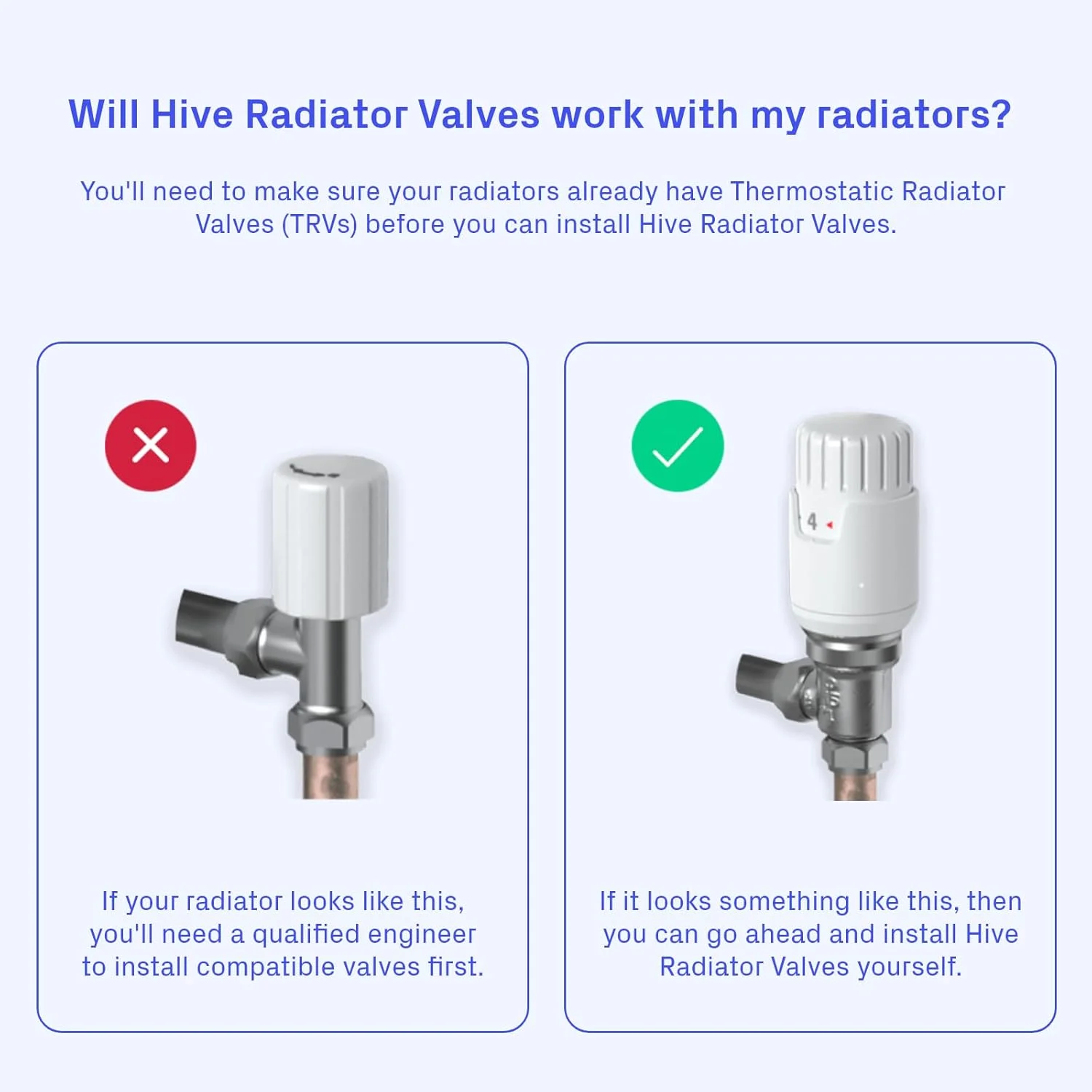
These days, there are smart TRVs too — controllable via an app on your phone, still not wired into the central system, but battery-powered, sending a signal to a hub over WiFi. The most popular version I come across is Hive’s. If you’re looking to add smart control to individual radiators rather than replacing your whole thermostat setup, the Hive Smart Thermostatic Radiator Valves are a solid, reliable option.
Curious why these valves stick in the first place? That comes down to water condition in the system — a story for another post.


